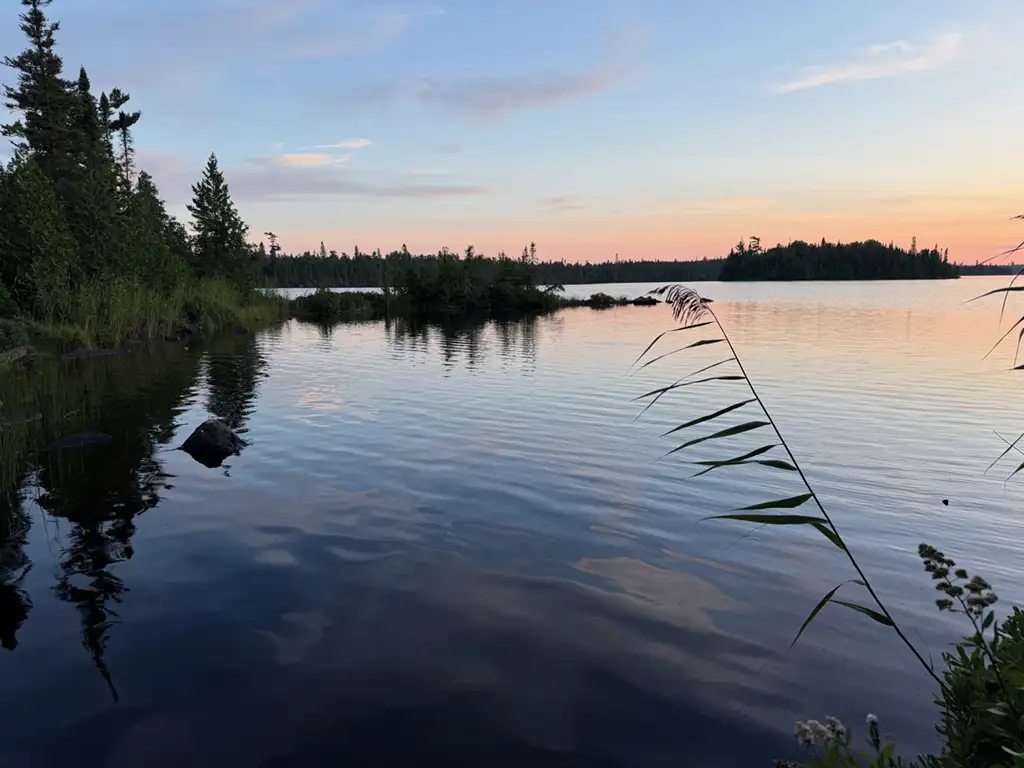

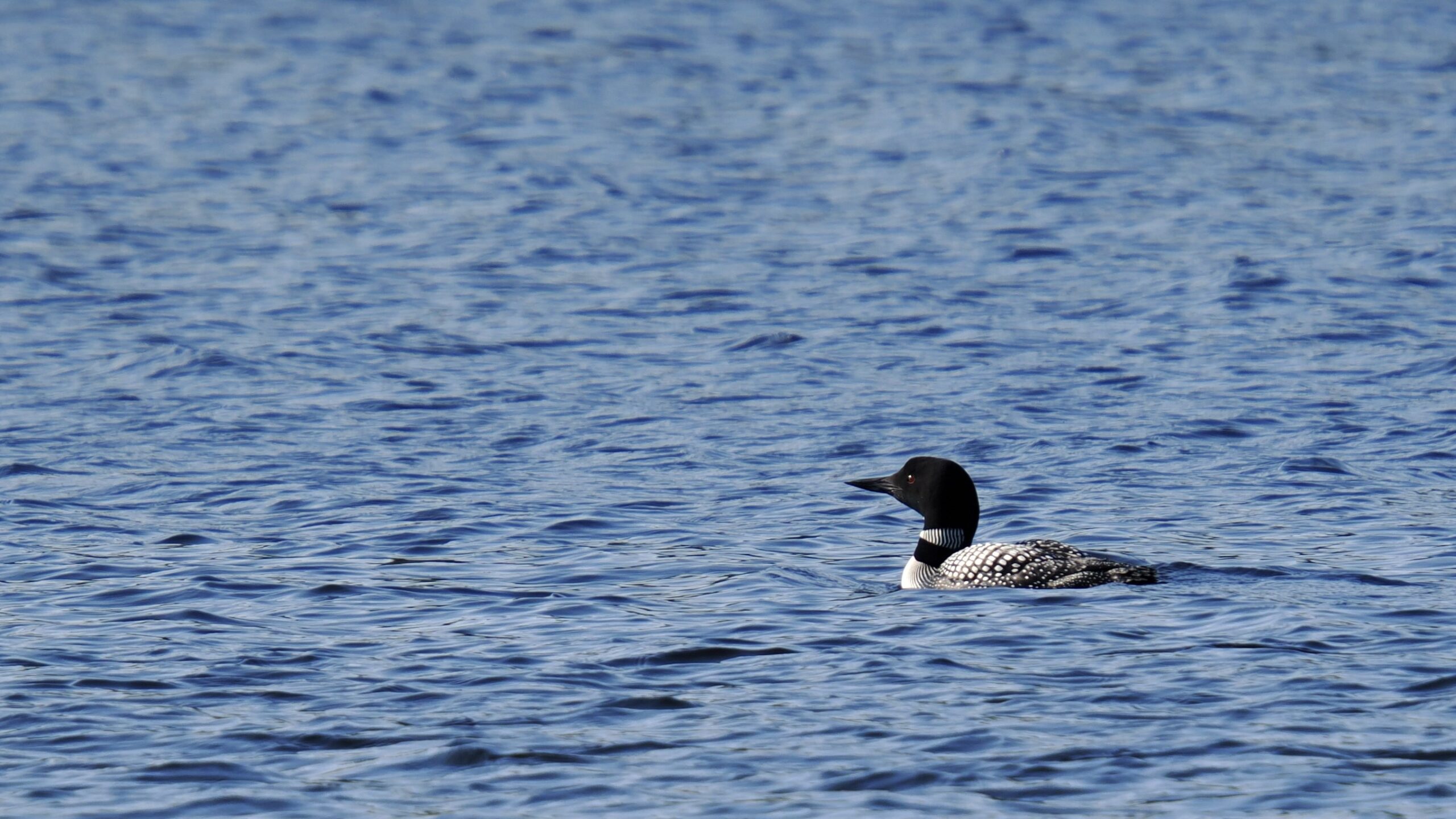
When you hear it, it feels entirely ancient. Part sorrowful wail, part manic laughter, the call of the Common Loon, Minnesota’s state bird, is the undeniable voice of the lakes along the Gunflint Trail and into the Boundary Waters. Gazing over the waters here while sipping your morning coffee at sunrise, the haunting blend of a wild laugh and a sorrowful cry instantly reminds you how far you are from our modern world.”
Beneath the beautiful sound of our loons is a species fighting a quiet battle for survival—and a dedicated group of locals determined to help them win it. Last year, the Chik-Wauk museum began its Loon Program for the Gunflint Trail. Volunteer-driven, this important program “exists to help ensure loons continue to thrive here, now and into the future.”
The volunteers at Chik-Wauk were inspired by the work and dedication of Phyllis Sherman, who had been a volunteer for the DNR LoonWatch program since 2003. In 2013, she called together neighbors and friends for a presentation by noted loon specialist Dr. Walter Piper. Dr. Piper is best known as the founder and director of The Loon Project, a massive, multi-decade scientific study dedicated to tracking the behavior, territoriality, and population dynamics of the Common Loon. He began his focused field research on loons in 1993.
The 2013 presentation included Phyllis’s experiences and lessons learned from observing loons nesting on a floating platform in front of her cabin over several years.
Loons face severe nesting disruptions when water levels fluctuate. Platforms like Phyllis’s automatically rise and fall with water levels, keeping the eggs safe from flooding or stranding. They are customized with small vegetation ramps for chick access and camouflage branches to shield the nests from predatory eagles and hawks.
In 2019, Dr. Piper published data showing an estimated 22% decline in the adult loon population in northern Wisconsin over a 25-year period. Recent data indicate that Minnesota’s loons are beginning to follow a similarly worrisome trajectory—characterized by lower chick weight, fewer successful hatches, and lower survival rates among young adults.
The nemesis for early-season canoe trippers, the Black Fly, has been a major focus of Dr. Piper’s work. Driven by warmer, wetter spring seasons, sudden spikes in black fly populations can physically torture nesting loons, forcing them to abandon their eggs entirely to dive underwater for relief. We all understand that urge.
By pinpointing triggers such as water clarity, shoreline development, or pests that lead to nesting failures and population declines, Dr. Piper’s data provides a clear blueprint that local conservation groups like our Loon Program need to build successful artificial nesting platforms and push for stronger shoreline preservation laws.
A decade after that fateful 2013 presentation, the seeds Phyllis planted finally bloomed. Last summer, the Chik-Wauk Museum officially launched the Loon Program. Mona Hanson, a retired educator who is our neighbor, helped kick it off. She’s a co-coordinator for the volunteer Loon Rangers, observers and rescuers who monitor and record loon behavior throughout the season to help researchers understand long-term trends and educate the public about threats to loon survival. Mona attended the 2013 program featuring Dr. Piper and remains inspired by his presentation. Her co-coordinator is noted nature, and loon, photographer Mark Ellis.
“It’s a beautiful thing to see how the Loon Program brings people together,” Mona said. “It builds a sense of community and is a validation of community spirit.”
The path to naming the Common Loon Minnesota’s official state bird was a 30-year legislative saga, marked by intense political struggles reminiscent of today. Long before 1961, several other birds were championed by school children, women’s clubs, and early ornithologists—most notably the American Goldfinch (which was considered the unofficial state bird for years), the Wood Duck, the Mourning Dove, and the Pileated Woodpecker.
Early efforts to nominate the loon met surprising resistance. Critics labeled loons “snowbirds” because they abandon Minnesota lakes for warmer coastal waters every winter. Some lawmakers argued that the name “loon” was beneath the state’s dignity, fearing it tarnished Minnesota’s reputation as “loony.”
Finally, on March 13, 1961, Governor Elmer L. Andersen signed the bill officially making the Common Loon the state bird. Today, our state boasts the largest loon population in the continental United States, with roughly 12,000 birds.
Unlike most birds, whose bones are hollow and light for easy flight, loons possess dense, solid bones. The extra weight acts as natural ballast, reduces their buoyancy, and allows them to dive up to 250 feet deep and stay submerged for up to five minutes while hunting fish.
Adult loons weigh between seven and thirteen pounds and have a wingspan up to five feet. In the air, they can fly up to 75 mph, and if you’ve seen them swim, you’d swear that’s how fast they move to catch a fish. Loons have a 20-30 year lifespan.
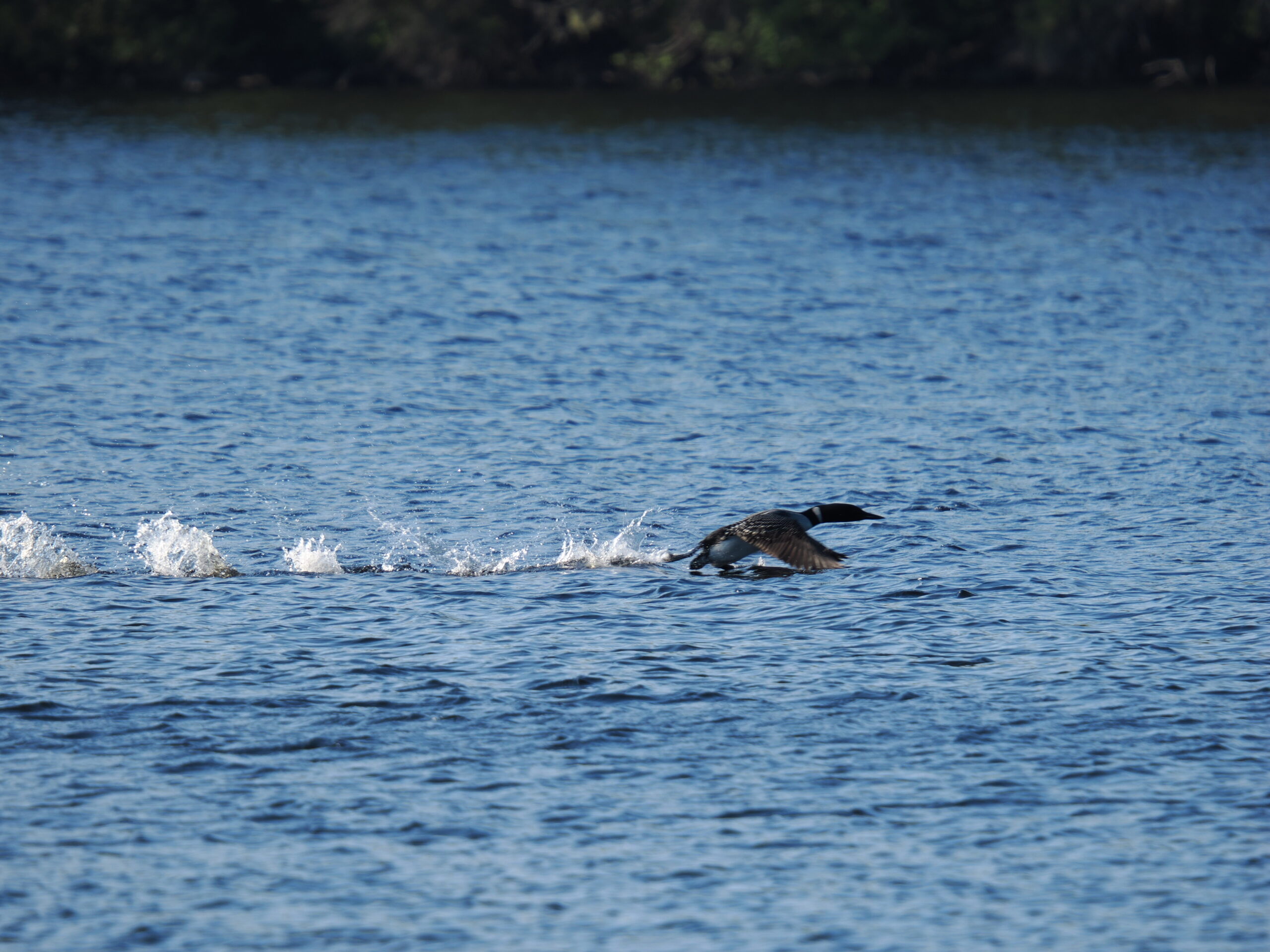
A loon’s legs are near its tail and are very effective at propelling it through the water. But they are slightly better than useless on dry ground. They need a water runway of 100-600 feet to lift off.
Loons are territorial, solitary breeders with an aversion to crowds, whether human or other birds. A pair of them will claim an entire small lake or a dedicated bay of a larger lake for themselves. While loons often pair up for multiple consecutive seasons and are loyal to a territory, they often return to the same lake year after year.
Nesting for these snow birds begins almost immediately after ice-out in the Spring. The pair constructs its nest from reeds, grasses, and mud directly on the water’s edge, preferring small islands or floating bog mats that offer immediate access to the water. Not prolific reproducers, the female lays one or two eggs, which both parents take turns incubating for about a month.
When the chicks hatch, they are capable of swimming but lack waterproof feathers and cannot regulate their own body temperature. For the first couple of weeks, mom and dad carry the chicks on their backs to shelter them from cold water and protect them from aquatic predators like snapping turtles, large muskies, and northern pike. Chicks will not learn to fly until they are more than two months old.
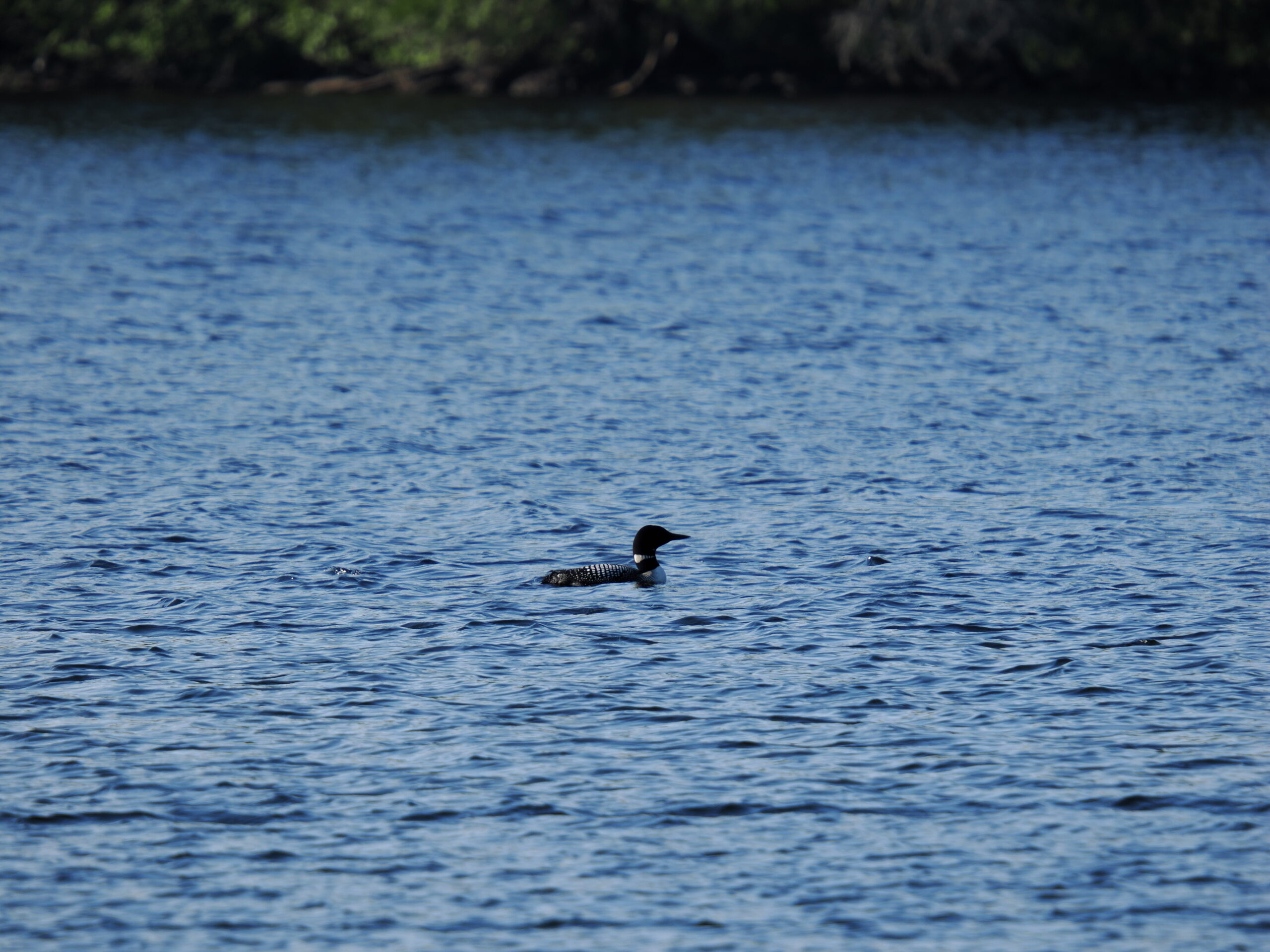
In September, adult loons begin gathering on larger Minnesota lakes to feed and build up fat reserves. By late September, the adults depart. They leave their chicks behind, just as humans leave their offspring at university. It’s part of the cycle of life; the juveniles migrate a month or so later, navigating purely by instinct.
The loons ultimately spend the winter in coastal marine waters, stretching from the Atlantic coast to the Gulf of Mexico. When a juvenile loon reaches the ocean shores, it stays there for up to five years. When they reach reproductive maturity, they migrate back north to seek out a breeding territory of their own.
While Minnesota’s loon population is relatively stable, researchers have documented a subtle, downward trend in reproductive success over the last two decades. Human activity, yours and mine, and changing environments are threatening the loon population.
Loons are visual hunters, and water clarity is declining. Long-term studies show that heavier summer rainfalls and nutrient runoff from shoreline development are muddying Minnesota lakes. When water clarity drops in July—the absolute peak of chick growth—parents struggle to spot fish underwater, resulting in lighter, malnourished chicks with lower overall survival into adulthood.
As natural shorelines are developed with sandy beaches and retaining walls, loons lose their preferred nesting habitats. Powerboat wakes can easily wash over low-lying nests, flooding the eggs and causing the adult loons to abandon a site permanently.
Warmer, wetter springs have triggered severe spikes in the numbers of biting black flies. Swarms of these nasty creatures can physically overwhelm nesting loons, driving them to abandon their nests entirely. Additionally, changing water temperatures have accelerated outbreaks of avian botulism (often linked to invasive zebra mussels in migration corridors), killing tens of thousands of migrating waterbirds.
Airborne mercury from industrial emissions settles into northern lakes, bioaccumulating up the food chain into the fish that loons eat, which impairs neurological health and reproductive output.
But a leading cause of adult loon deaths, something all of us can do something about, is lead poisoning. Loons swallow small pebbles from the lake bottoms to help grind up food in their gizzards. If they accidentally ingest a lost lead fishing sinker or jig, the lead dissolves in their stomach acid, invariably killing the bird within two weeks.
Responsible fishing is something we can all do. In addition to eliminating lead sinkers and jigs, do not leave lengths of monofilament fish line in the lakes. It can get tangled around a loon and other waterfowl, causing a needless, prolonged, and painful death.
When shore casting, avoid areas with nesting loons. One of the emergencies that rescue groups like the Loon Program respond to is loons that have been hooked by a fishing lure. Don’t be a reckless angler.
Loons are a proper representative of Minnesota and its people. Enjoy seeing them when you do, but like your crotchety neighbors, give them their space. And when you visit Chik-Wauk Museum, take some time and get involved in the Loon Program.